For homes
We handle flooded basements, burst pipes, and appliance leaks in Midland homes. You get a clear plan and daily updates.
- Basement flooding
- Burst supply lines
- Appliance leaks
When water is rising in your basement or storm runoff has backed into your ground floor, Flood Cleanup Midland MI gets the water out and the structure dry before mold takes hold. We handle residential flood cleanup Midland and commercial losses across Midland County, from sump pump failure to sewage backup. Our crews extract, dry, and document every job so you can get back to normal.
 Moisture mappingWater extractionDrying setup
Every flood cleanup job includes inspection, water extraction, material removal where needed, structural drying, and final moisture verification. We document the entire process with photos and readings for your insurance claim. Rebuild work like drywall, paint, and flooring replacement is available as part of the same project or as a separate phase.
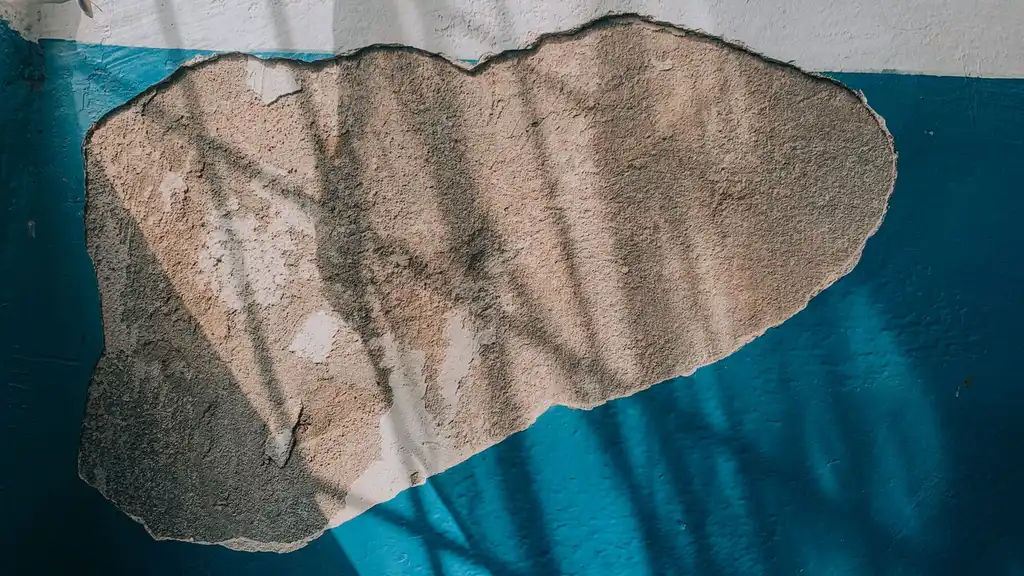
We use moisture meters, thermal imaging cameras, and hygrometers to find every wet area, including water hidden behind walls and under floors. You get a clear picture of the affected zone before any work starts.
Truck-mounted extractors and wet/dry vacuums remove standing water from carpet, hardwood, and concrete. For contaminated water, we remove affected materials first to prevent cross-contamination to clean areas.
After extraction and material removal, we apply antimicrobial solution to framing, subfloor, and wall cavities. This step limits mold growth while the structure dries and is standard on every flood cleanup we perform.
We position air movers and dehumidifiers based on the size and layout of the affected area. Drying mats go under hardwood. Equipment stays until daily moisture readings confirm materials have reached dry standard.
Photos, moisture logs, and an Xactimate estimate are compiled for your adjuster. We bill your carrier directly when coverage applies and keep you informed on claim status throughout the process.
The approach is the same for a home and a business. What changes is the access, the schedule and who needs the paperwork.
We handle flooded basements, burst pipes, and appliance leaks in Midland homes. You get a clear plan and daily updates.
We work with property managers and business owners on water losses that affect operations. Scheduling is coordinated around your hours.
A plain-language look at what Flood Cleanup involves and when it is needed.
See how it worksFlood Cleanup Midland MI is the process of removing standing water, extracting saturated materials, and drying a structure back to safe moisture levels after a flood, burst pipe, or sewage backup. It is not a shop vac and a fan. We use moisture meters, thermal imaging cameras, and dehumidifiers to find water hiding behind drywall and under subfloor, then we dry it to a verified standard. Every job starts with a full inspection and a written scope.
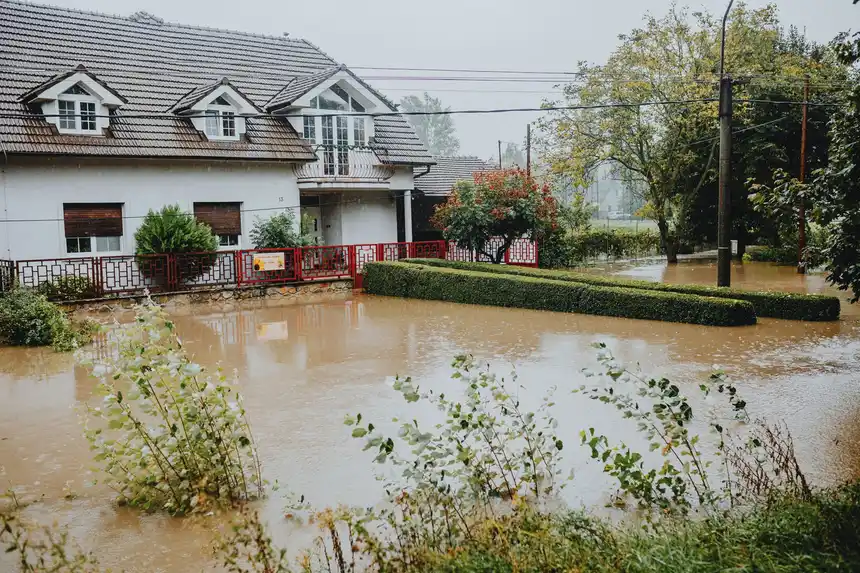
Midland properties flood for predictable reasons: spring snowmelt pushing the Tittabawassee, heavy rain overwhelming sump pumps, and older homes in Downtown Midland with foundation seepage. When you search for flood damage cleanup near me Midland, you need a crew that knows how local basements and crawlspaces are built. We pull wet carpet padding, cut out saturated drywall, and treat framing with antimicrobial solution before we set drying equipment.
Flood cleanup is about removing water fast and drying materials to verified levels.

Every flood cleanup follows the same sequence: assess, extract, dry, verify, restore. Here is what you will see from the first phone call to the final moisture check.
We walk the affected area with a moisture meter, thermal imaging camera, and hygrometer to map exactly where water traveled. You get a plain explanation of what is wet, what can be saved, and what has to come out. This usually takes 30 to 45 minutes.
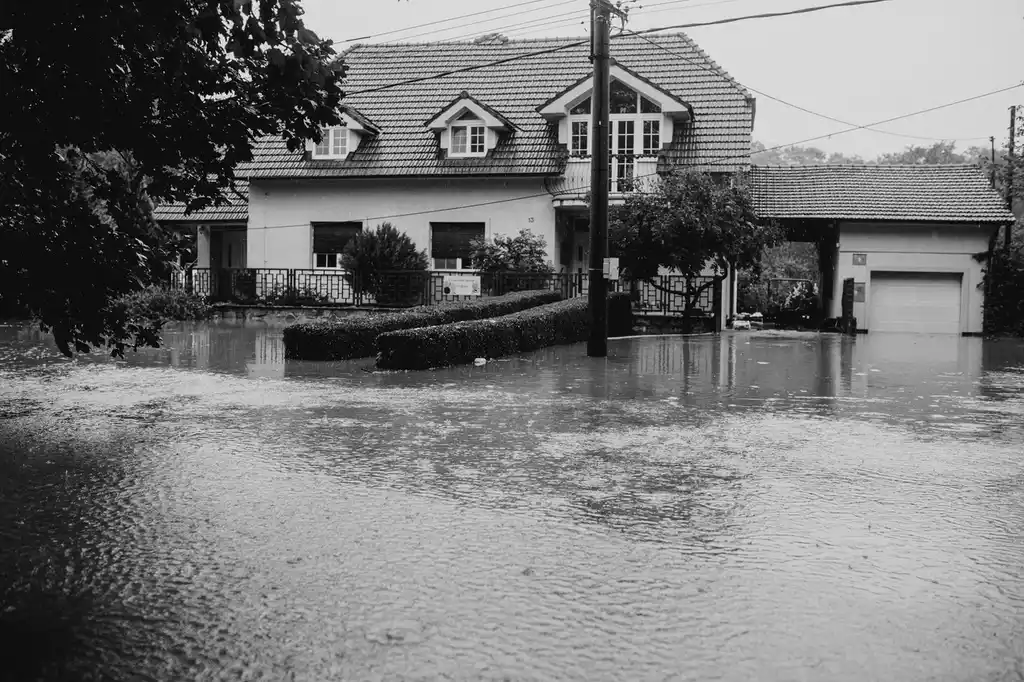
Truck-mounted water extractors and wet/dry vacuums pull standing water from carpet, hardwood, and concrete. For sewage backup or category 3 water, we remove contaminated materials first. Most residential extraction is complete in 2 to 4 hours.
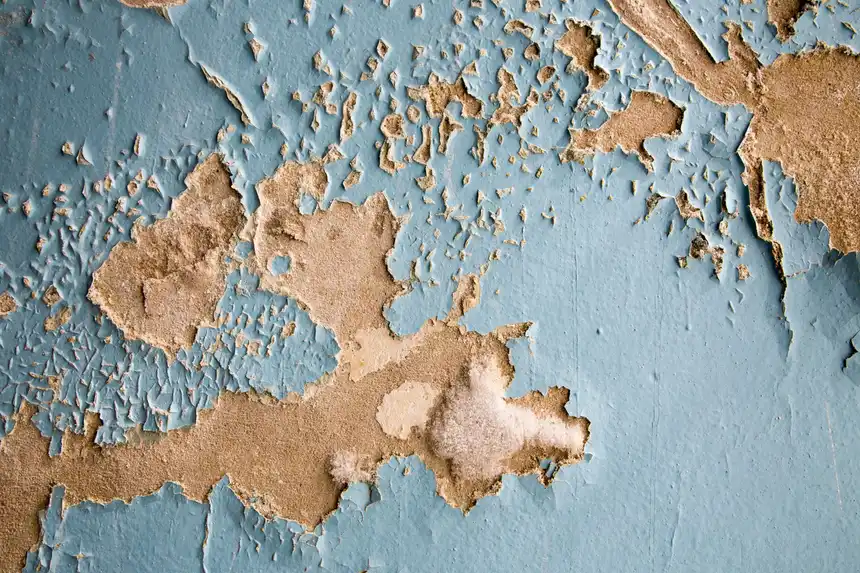
We pull wet carpet padding, cut saturated drywall 12 to 24 inches above the water line, and remove insulation that has lost its R-value. Baseboards come off so wall cavities can dry. Everything removed is photographed and logged for your claim.
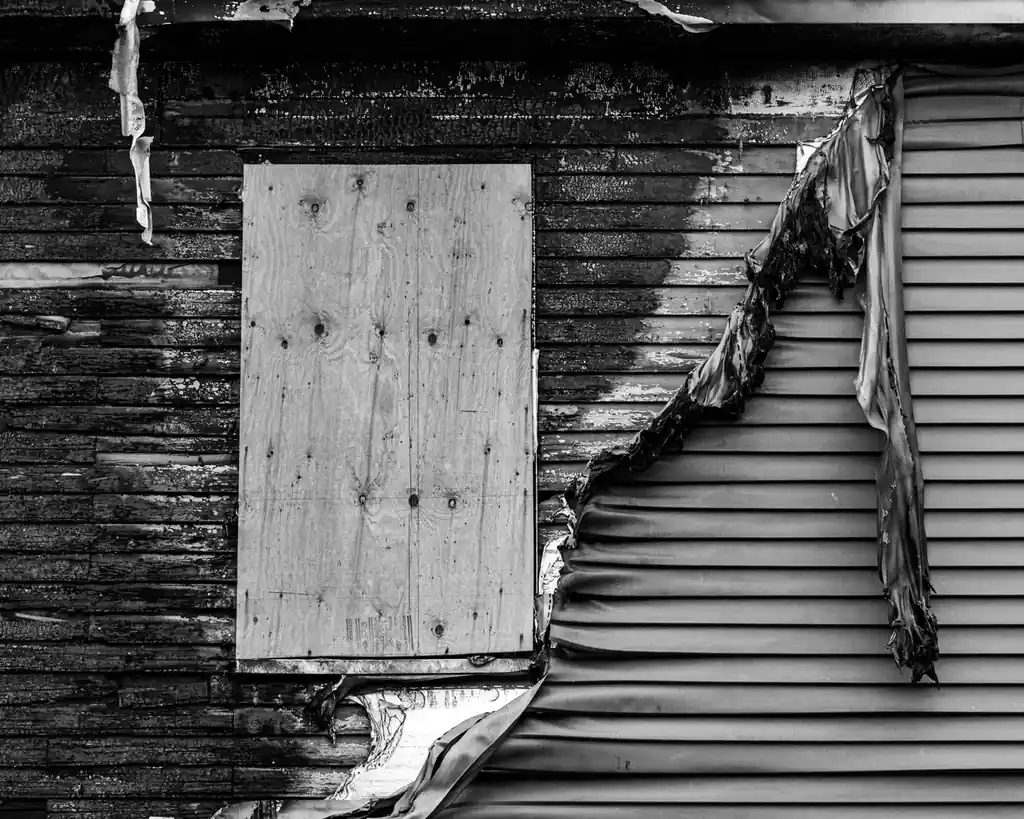
We position Dri-Eaz and Phoenix air movers and dehumidifiers to dry framing, subfloor, and wall cavities. Drying mats pull moisture from hardwood. We check readings daily and adjust equipment until materials hit dry standard, usually 3 to 5 days.
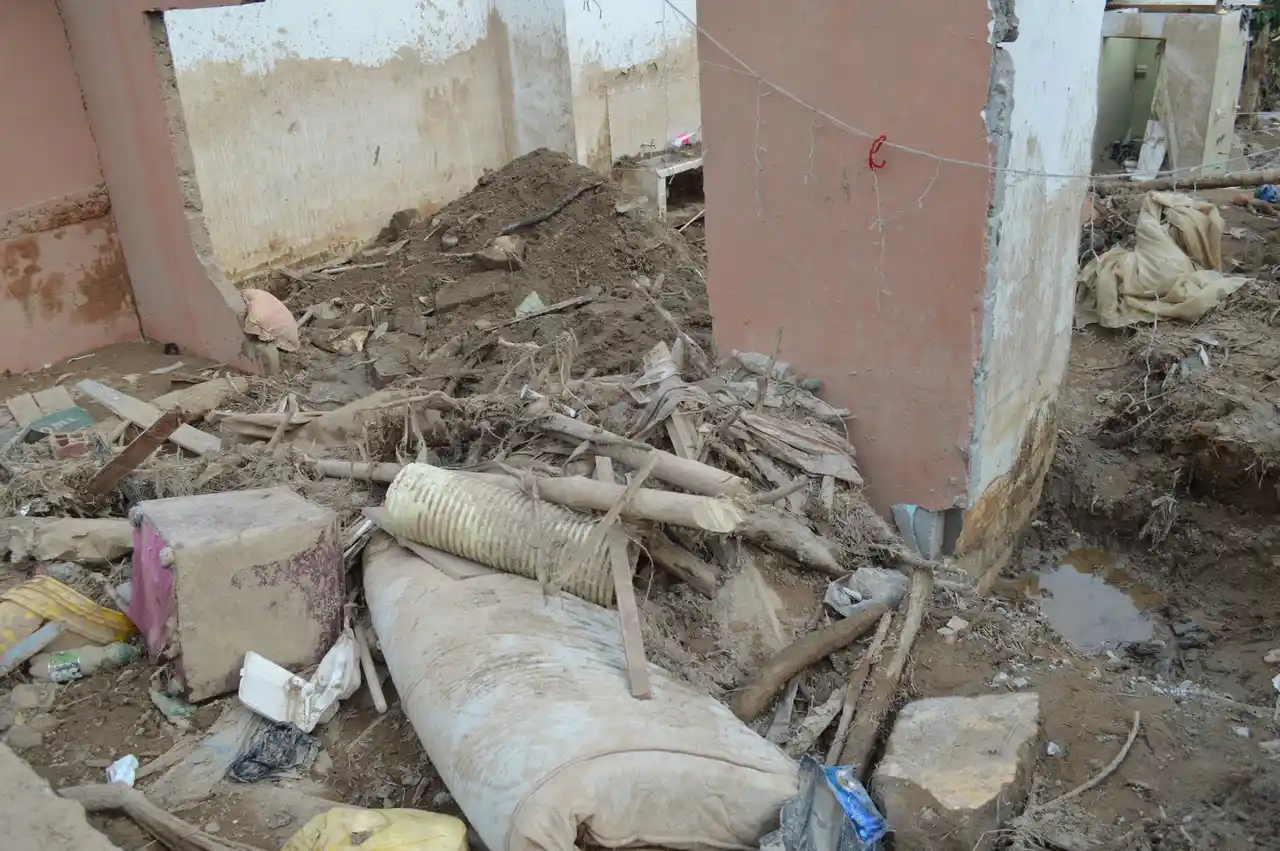
Final moisture readings confirm the structure is dry before we remove equipment. We then replace drywall, baseboard, and flooring as needed. You get a completion report with before-and-after readings for your records and your insurance company.
Move across a circle, or focus it and press Enter, for an illustrative thermal view of the photograph.

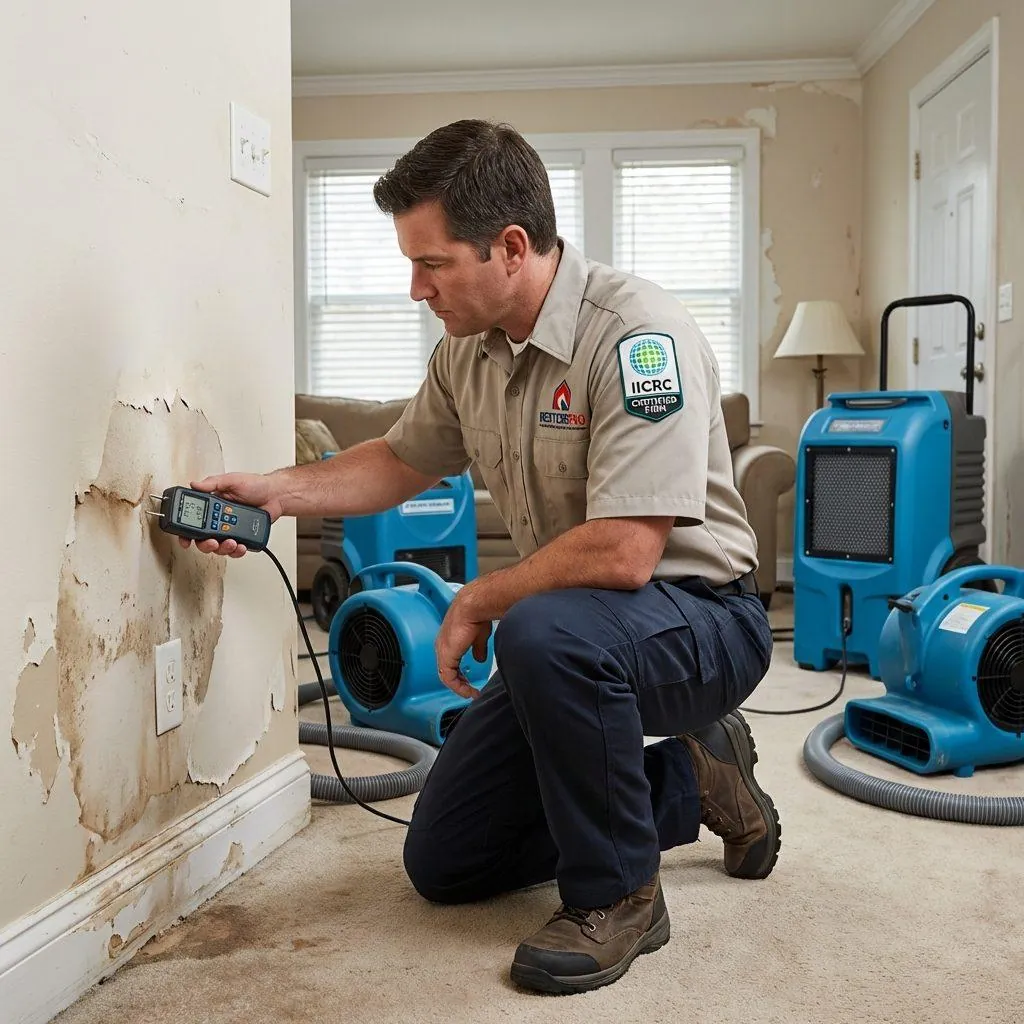
Pin and pinless meters measure moisture content in drywall, framing, and subfloor. Readings tell us where water traveled and when materials are dry.
Infrared cameras reveal temperature differences that indicate hidden moisture behind walls and under floors without opening every surface.
Low-grain refrigerant and desiccant dehumidifiers pull moisture from the air so wet materials can release water and dry.

High-velocity air movers create evaporation at the surface of wet materials. Placement follows a calculated pattern, not guesswork.
Powerful extraction units pull standing water from carpet and hard surfaces far faster than portable vacuums.
Thermal views are illustrative, generated from the photographs.
A camera on a flexible probe lets us inspect inside wall cavities and under cabinets without unnecessary demolition.
Drying mats pull moisture from hardwood flooring through a sealed mat system, often saving floors that would otherwise be replaced.
The S500 sets the industry standard for water damage restoration, including how to classify water, categorize contamination, and verify drying. We follow it on every flood cleanup so results are measurable, not subjective.
We log readings every day and adjust equipment placement based on the numbers. Drying is not finished until materials reach dry standard, which we document for you and your insurance company.
Xactimate is the estimating platform most insurance carriers use. Building the estimate in that format reduces back-and-forth and speeds up claim approval.
After extraction and material removal, we apply antimicrobial solution to framing and cavities. This limits mold growth during the drying period and is standard on every job.
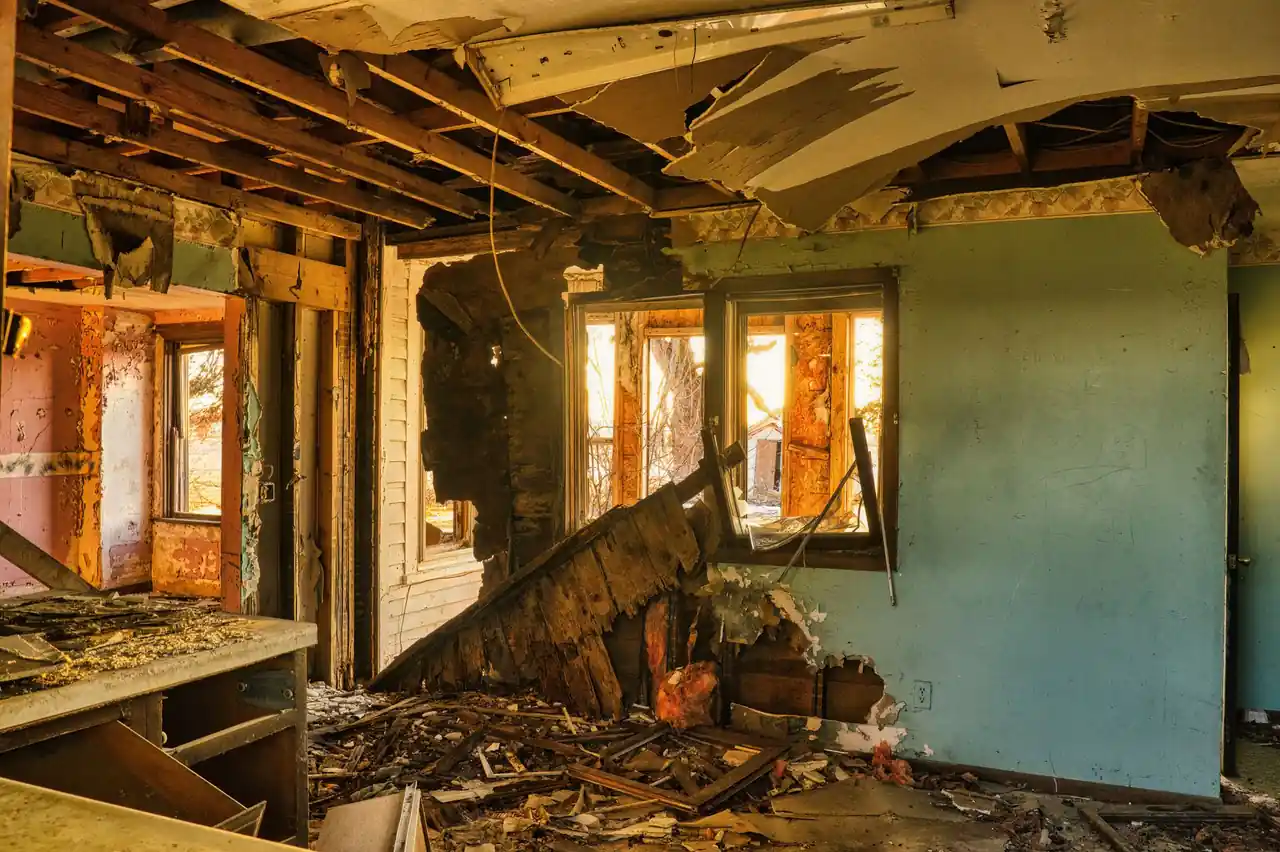
A sump pump fails during a spring storm and water covers the basement floor overnight.
We extract the standing water, remove wet carpet and padding, and set drying equipment the same day. If the pump needs replacement, we can coordinate that so the basement is protected before the next storm.
Outcome: Basement floor and lower walls dry in 3 to 4 days, and the sump system is back online.
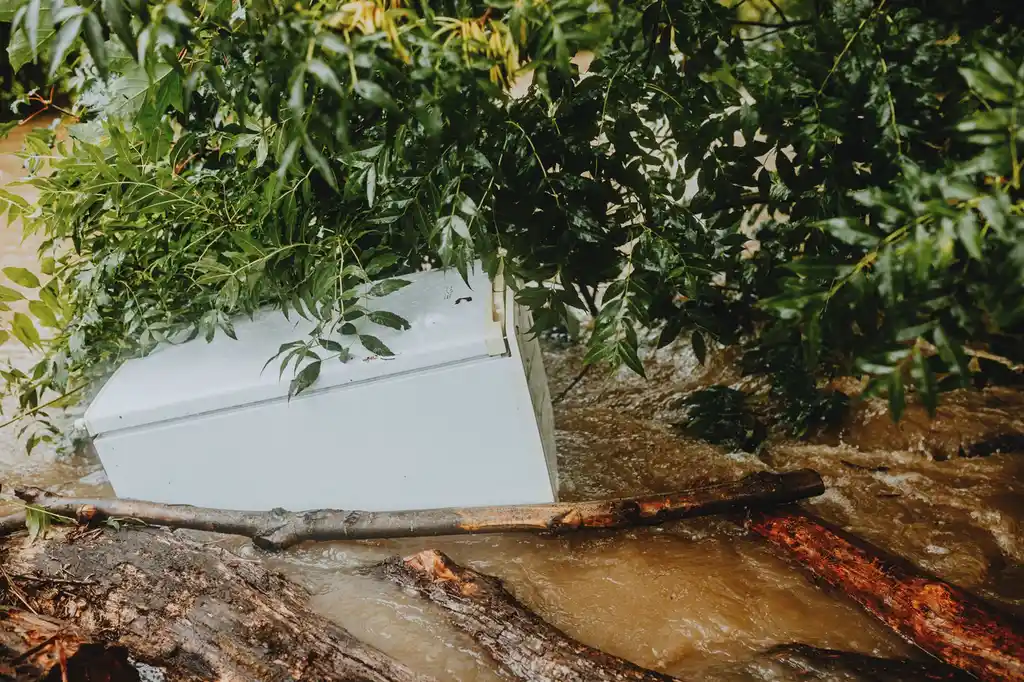
A supply line bursts behind a kitchen wall while the family is at work or school.
We shut off the water if it is still running, extract from the kitchen and adjacent rooms, and open the wall cavity to dry the framing. Wet drywall and insulation are removed and logged for insurance.
Outcome: Framing reaches dry standard in 4 days, and the wall is rebuilt after verification.
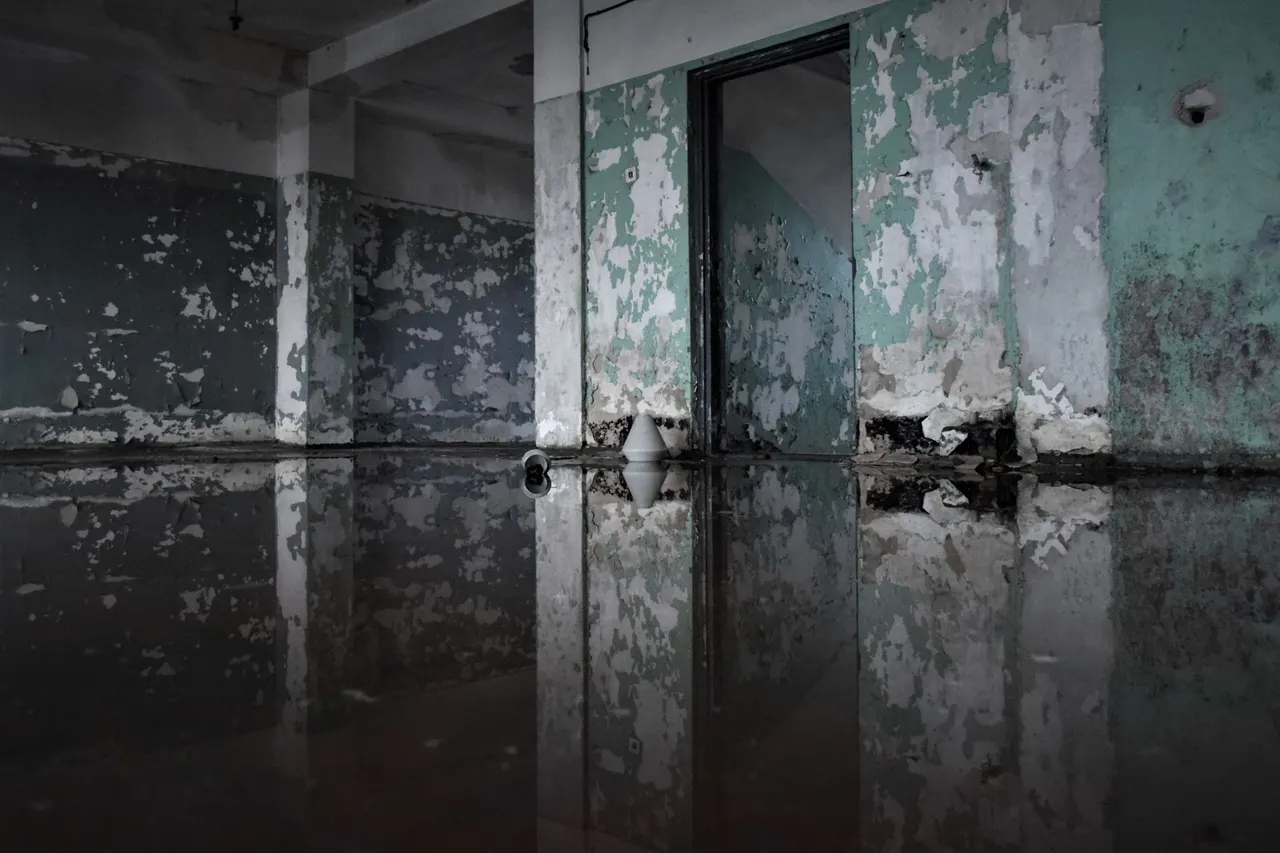
Heavy rain overwhelms a floor drain and sewage backs into a laundry room.
Because this is category 3 water, we remove all contaminated materials, disinfect surfaces with antimicrobial solution, and dry the remaining structure. Documentation is thorough for the insurance claim.
Outcome: The room is sanitized and dry, and rebuild can start without risk of mold or bacteria.
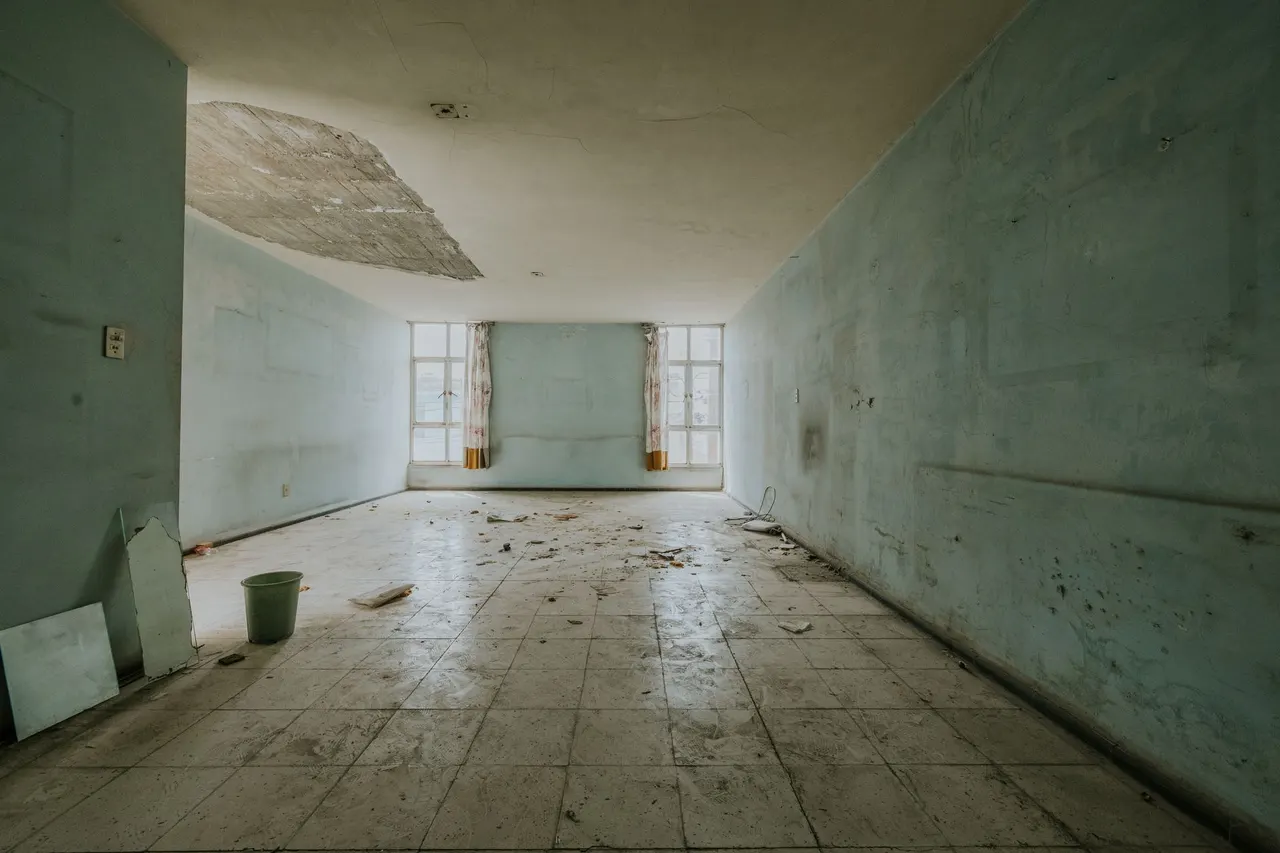
An appliance leak under a refrigerator soaks hardwood flooring in a Midland Central home.
We extract surface water, place drying mats under the hardwood, and run dehumidifiers to pull moisture from the boards and subfloor. Daily readings track progress until the wood stabilizes.
Outcome: Hardwood is saved in most cases, avoiding the cost of full floor replacement.
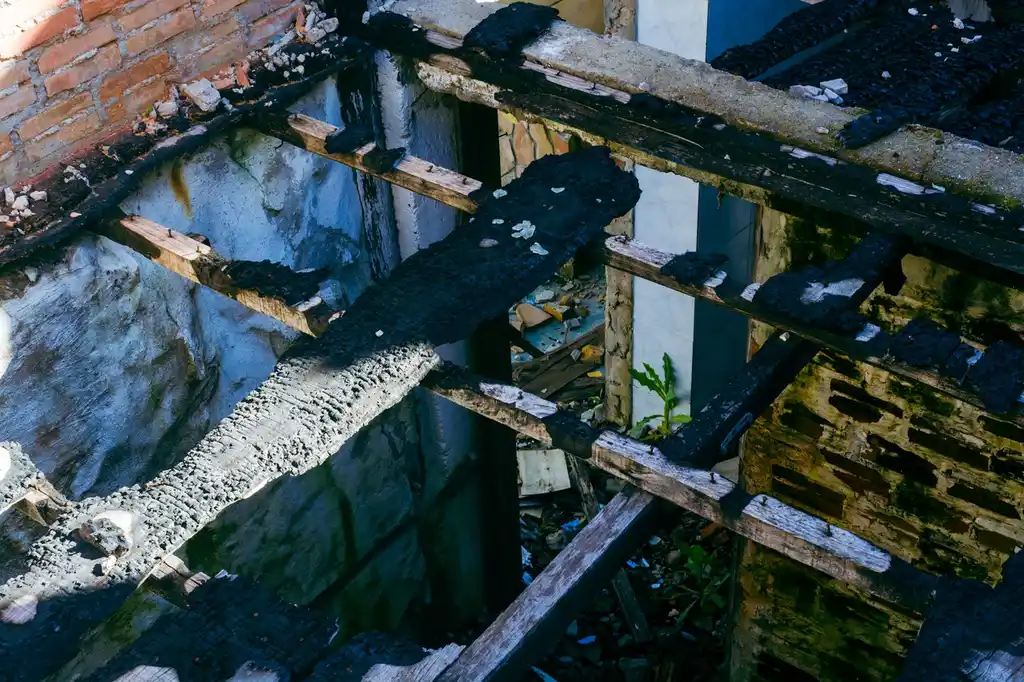
A roof leak after a storm leaves a ceiling stain and wet attic insulation.
We inspect the attic with moisture meters and thermal cameras, remove saturated insulation, and dry the ceiling framing. The source of the leak is identified so the repair is permanent.
Outcome: Ceiling cavity dries, and drywall replacement happens after moisture is verified gone.

Midland sits at the confluence of the Tittabawassee and Chippewa rivers, and that geography drives most of the flooding we see. Spring snowmelt and heavy rain raise river levels and overwhelm sump pumps in low-lying neighborhoods. Older homes near Downtown Midland often have block foundation walls that seep, while newer construction in Midland Central tends to have finished basements with more material at risk.
Winter brings a different problem: frozen pipes that burst when they thaw, usually in exterior walls and crawlspaces. We handle emergency flood cleanup in Midland MI year-round and know which parts of the 48640 and 48642 ZIP codes drain poorly after a storm. If you need affordable flood cleanup in Midland, the fastest way to keep the bill down is to call before water spreads to more rooms.
Before: Four inches of standing water covered 700 square feet of finished basement carpet after a spring storm. Carpet padding was saturated, and drywall was wet 18 inches up the wall.
After: We extracted the water, removed carpet and padding, cut drywall at 24 inches, and dried the framing in 4 days. New carpet and baseboard were installed the following week.
Test your sump pump every spring before storm season and consider a battery backup so a power outage does not leave the basement unprotected.
Before: A supply line burst behind the kitchen wall and soaked drywall, insulation, and hardwood in two adjacent rooms. The homeowner found it when the floor cupped.
After: We opened the wall, removed wet insulation and drywall, dried the framing in 3 days, and used drying mats to save the hardwood. The wall was rebuilt and painted to match.
Replace braided supply lines every 5 to 7 years and shut off the main valve before extended trips.
Before: Heavy rain caused a floor drain backup that spread category 3 water across a laundry room and into a hallway. Vinyl flooring and lower drywall were contaminated.
After: We removed all contaminated materials, disinfected with antimicrobial solution, and dried the structure in 5 days. The room was rebuilt with mold-resistant drywall and new flooring.
Have your sewer lateral inspected every few years, especially in older Midland neighborhoods with clay tile lines.
Most flood damage in Midland comes from a handful of predictable sources. Knowing which one you are dealing with changes how the cleanup is handled and what can be saved.
Fast extraction and measured drying protect materials and limit mold risk.
We start extraction within hours of your call and set air movers and dehumidifiers the same day. Drying a structure in 3 to 5 days instead of 2 weeks often saves carpet, baseboard, and lower drywall that would otherwise be cut out and replaced.
Mold can colonize wet drywall and insulation in 24 to 48 hours. Our technicians apply antimicrobial solution to framing and use IICRC AMRT-trained methods to stop growth. If you ask can you prevent mold after flood cleanup in Midland MI, the answer is yes when drying starts fast.
We photograph every affected room, log moisture readings, and build an Xactimate estimate your adjuster can read. That paperwork is why most flood damage cleanup Midland MI claims move through approval without back-and-forth over scope.
We are based in Midland and know the 48640 and 48642 neighborhoods. When a storm hits Midland County, we are not driving in from three counties away. You get a crew that can be on-site while the water is still moving.
What a written scope covers and what shapes it. Prices are set by the business after the first look.
Included
Depends on
Clear records you can keep and share.
Daily readings for each affected area
Images of the loss and progress
Written outline of work performed
Final readings confirming dry standard
The category of water determines what can be dried and what must be removed.
Clean water from a supply line
Gray water with some contamination
Black water with pathogens
A list like this tells people straight away whether you cover their street. Not listed? Call and ask: it only takes a minute.
Based in Midland and covering the places around it. Pick one for local details.
A small basement with clean water may land near the low end; a sewage backup affecting multiple rooms pushes higher. We provide a written scope and estimate before work begins so there are no surprises.
Most homeowner policies cover sudden water damage like burst pipes and appliance leaks, but standard policies do not cover rising groundwater flooding. You need separate flood insurance through NFIP or a private carrier for that. We document every loss with photos and moisture readings and bill your carrier directly when coverage applies.
Extraction usually takes 2 to 4 hours. Structural drying runs 3 to 5 days for most Midland homes, depending on how much water was absorbed and what materials are wet. Hardwood floors and dense subfloor take longer than carpet over concrete. We check moisture daily and do not pull equipment until readings confirm the structure is dry.
The right company is the one that shows up fast, explains what is wet, and documents the job for your insurance. We meet all three, and we will walk you through our process before you commit to anything.
Other services from the same team.
Standing water gets worse every hour. Call us and we will dispatch a crew to your Midland address, extract the water, and start drying the same day. One call handles inspection, extraction, and insurance documentation.